
George Herkes & Son Joinery has been sorting out joinery work across East Lothian since 1989, and that stretch of time matters most on exactly the calls this page is about: knowing on the phone whether your job is timber or masonry, before anyone’s tools come out.
The Short Version
- How to tell a joinery job from a building job over the phone
- Why alcove wardrobes and sash windows go straight to a joiner
- Which parts of a loft or garage conversion are timber trades
- How timber kit extensions split between framing and finishing
- Why renovation staging matters when trades hand work between them
- Where coastal timber wear changes what counts as joinery work
That 1989 starting point now sits alongside East Lothian Trading Standards Trusted Trader accreditation, with a rating of 5.0 from 62 reviews under that council-backed scheme, and the same team has taken on joinery in East Linton and across the wider county on that record.
Get in touch with George Herkes & Son Joinery for a free quote and put a straight answer on your East Lothian job before you call anyone else.

What’s the difference between a joiner and a builder?
A joiner works with timber: doors, windows, staircases, fitted furniture and structural woodwork, usually cut and fitted with precision to a room or an opening. A builder covers the wider structure of a property, including brickwork, foundations, plastering and coordinating a whole project. Most jobs in the home fall clearly to one or the other, but some need both.
George Herkes & Son Joinery gives free quotes on Joiner. Ask George what your job involves.
Who you need for the jobs people get wrong
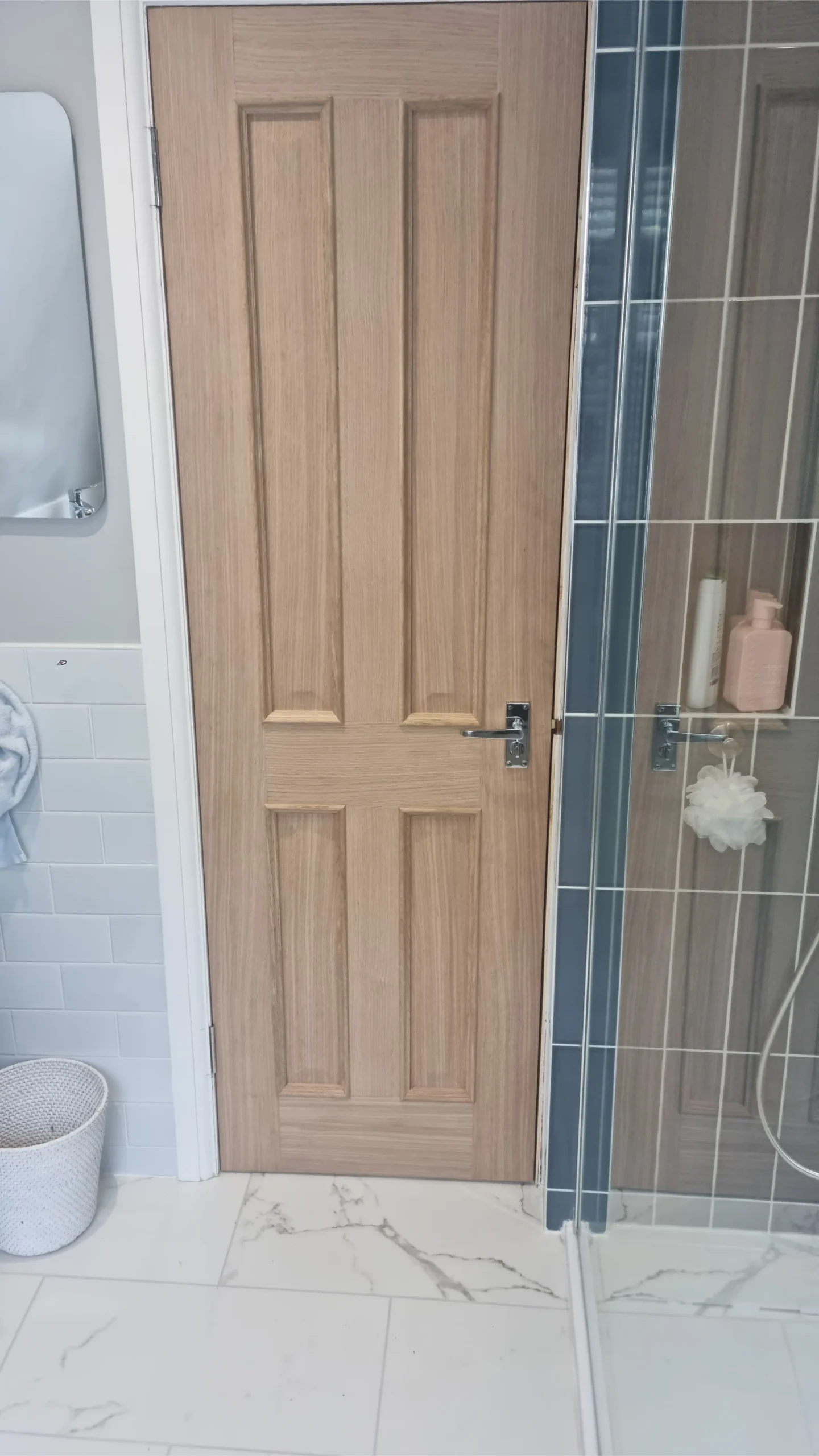
People often call a builder for something a joiner should be doing, and the other way round. If you need a wardrobe built into an awkward alcove, a staircase repaired, or sash windows replaced in an older house, that’s joinery work, not building work. A builder will often bring one in anyway, so you’re better going straight to the source.
Where it gets confused is anything that sounds structural but is really about timber. A garage conversion, for instance, involves stud walls, flooring and finishing, all joinery, even though the word “conversion” makes people think of builders and bricklayers first. The same goes for a loft conversion: the roof structure, floor joists and staircase are all timber trades, not masonry.
- Doors, windows, skirting, fascias, soffits and cladding: joinery
- Fitted wardrobes, alcove units, media walls: joinery
- Foundations, brickwork, roof coverings, plastering: building
- Flooring, decking, log cabins and timber garden buildings: joinery
We work as a carpentry service in East Lothian covering all of this, from small repairs to full staircases built in the workshop rather than bought flat-pack. Is a builder ever the wrong call for a job like this? Yes, and it usually shows up later as doors that don’t hang square or units that don’t sit flush. If you’re not sure which trade a job needs, ask what it’s mostly made of. Timber points to a joiner. We’ve taken calls from people who’d already had a builder in and needed the woodwork put right afterwards, and we’ve heard the same from a joinery company in Athelstaneford working similar older properties nearby.
When a job needs both
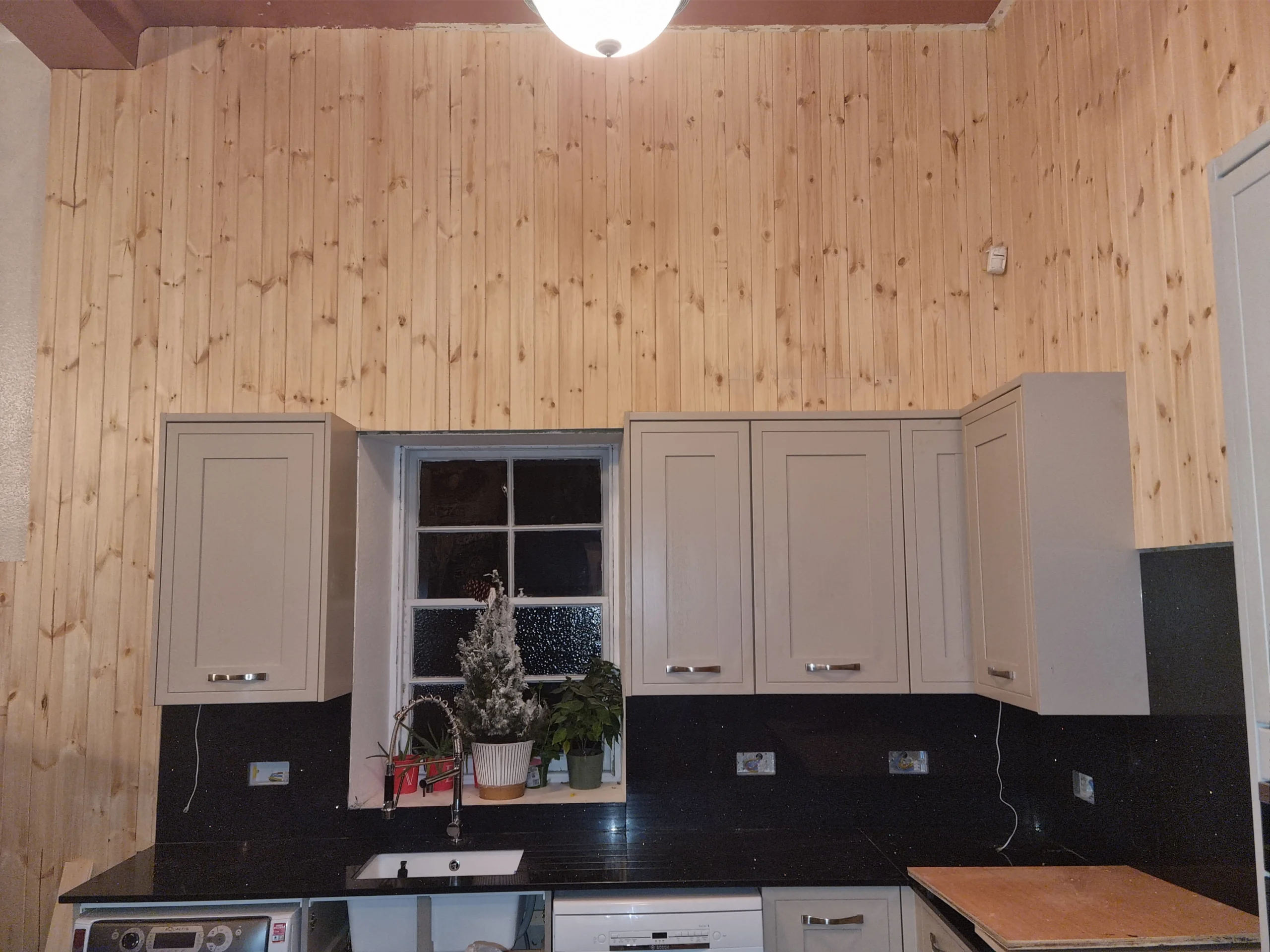
Bigger projects don’t respect the line between trades, and that’s normal. A home renovation might need a builder to open up a wall, then a joiner to fit doors, skirting and built-in storage once the structure is sound. A kitchen fitting project usually needs sockets and plumbing moved by other trades before the joinery goes in.
Timber kit extensions
A timber frame extension is a good example of overlap. The frame itself is structural joinery, built and erected in timber rather than block, but foundations, roofing and rendering outside that frame are building trades. We handle the timber structure through to finishing.
Loft and garage conversions
These sit almost entirely in joinery territory: floor strengthening, stud walls, staircases and finishing. Building trades might get involved if a roof needs altering, but for most of East Lothian’s semi-detached and terraced stock in Musselburgh and Tranent, the work is timber from start to finish.
Whole-property renovation
Here the sequence matters. Structural changes go first, then windows and doors, then bespoke joinery like fitted cupboards, then final fixtures. We handle the structural timber and finishing stages ourselves, without passing the joinery on to someone else partway through. If you’ve had work quoted by a joinery company in Penicuik for a similar renovation, the same staging logic applies wherever you are.

Where one trade stops and the other starts
The clearest way to draw the line is to ask what the job is made of and what it’s fixed to. A joiner deals with the timber itself, whether that’s a door, a window frame, a staircase or a run of fitted cupboards. A builder deals with the opening, the wall, or the ground it all sits on.
Coastal properties around North Berwick and Dunbar make this distinction sharper. Salt air and wind exposure wear timber windows and doors faster than inland stock, so repairs and replacements there are joinery work through and through, while any damp getting into surrounding masonry is a building matter. Further inland, near North Berwick Law or Traprain Law, access can be the bigger factor, and that changes how a job is scoped rather than which trade does it.
Older stone properties in Haddington and other burgh centres often need sympathetic window and door work that respects the original building, which is joinery, alongside stonework repairs, which isn’t. If you’re weighing up a job and you’re still not sure who to call, a joiner in Aberlady or anywhere else in the county should be able to tell you within a few minutes on the phone which side of the line your job sits on, and whether a builder needs to be involved at all.
We cover general joinery repairs, door and lock repairs, and structural timber work across East Lothian, including Haddington, Dalkeith and Edinburgh, so most jobs that turn out to be joinery rather than building can be sorted without bringing in a second trade at all.
Planning Joiner? Get a free quote from George Herkes & Son Joinery and find out what it takes.


