
A new opening cut for patio doors, or an old door swapped for something wider, is structural work first and a joinery job second. George Herkes & Son Joinery handle door fitting across East Lothian the way that work actually demands: lintels, openings and warrant conditions sorted properly before a single hinge goes on, rather than glass fitted first and questions asked later.
The Short Version
- Why patio doors usually skip planning but not building warrant
- What forming a new opening involves structurally, lintels included
- Which East Lothian property types trigger extra warrant checks
- When listed status or conservation areas change the rules entirely
- Why coastal properties need the right door specification, not just sign-off
George Herkes & Son Joinery has worked across East Lothian since 1989, and that history sits behind an East Lothian Trading Standards Trusted Trader accreditation with a 5.0 rating from 62 reviews, the kind of scrutiny that matters when a job involves cutting into a load-bearing wall. The same team that handles door fitting in Whitecraig applies the same structural care to every opening they form, whatever the property.
Get in touch with George Herkes & Son Joinery for a free quote on door fitting anywhere in East Lothian, before any wall gets touched.
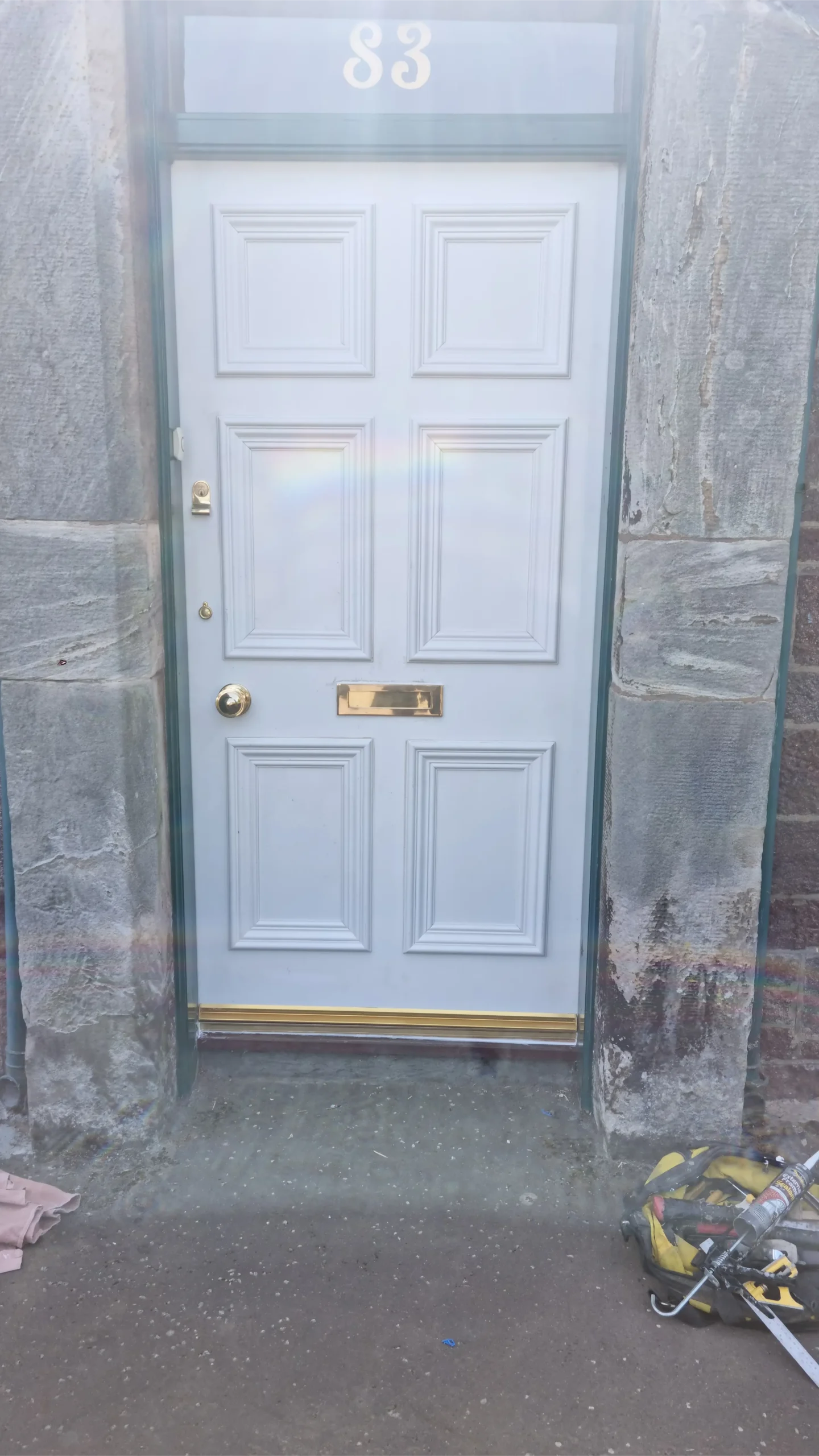
Can you put patio doors in without planning permission?
Yes, in most cases you can put patio doors in without planning permission, because swapping a window or wall section for patio doors on an existing house counts as permitted development rather than a change of use. The common exception is where the opening faces a road and would sit forward of the property’s main wall line.
Want a price for Door Fitting? Ask George Herkes & Son Joinery for a free quote.

The building warrant you still need
Planning permission and a building warrant are two different hurdles, and this is where people trip up. Not needing the first does not mean you can skip the second. Structural work almost always needs sign-off, because you are removing a section of wall and putting a beam in to carry the load above it.
A warrant checks the structural opening, the glazing safety standard, and the thermal performance of what goes in. It exists so that somebody other than the person doing the work has checked the wall will not sag in five years. Skip it and you can be asked to open the wall back up to prove the work was done properly, which costs more than getting it checked the first time.
We handle the structural side and the finishing on site rather than passing the opening to one trade and the doors to another. If you want to know who does door fitting in Aberlady or a door installer in Cockenzie & Port Seton, the same team is on site for both stages, from taking the wall out to hanging the doors themselves.
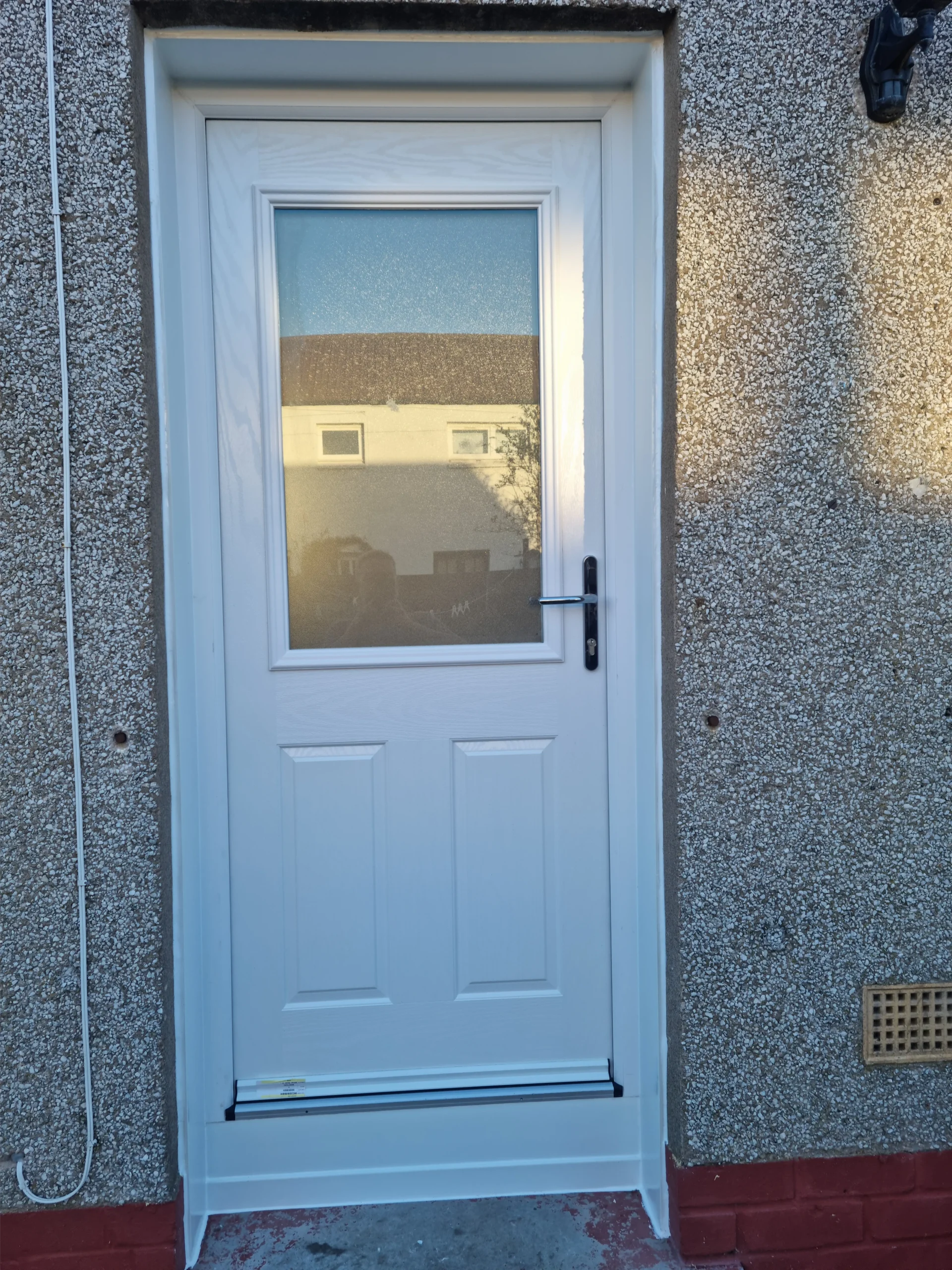
Usually yes, and here is the exception
The general rule holds for most homes across East Lothian: a straightforward swap of an existing window or wall opening for patio doors, on the rear or side of the house, does not need planning permission. That covers a lot of the terraced and villa housing found in Musselburgh, Prestonpans and Tranent, and most of the newer suburban stock around the commuter towns too.
The exception is listed buildings and properties in a conservation area. Older stone housing concentrated in places like Haddington, North Berwick and Dunbar can fall under one or both, and that changes the answer completely. A listed building needs listed building consent for a change like this regardless of where the opening sits, and a conservation area can restrict what the doors look like even when permission itself is not needed.
Georgian and stone-built town houses
These older properties, common in Haddington and other burgh centres, often have solid stone walls rather than a cavity, which changes how the opening is formed and what has to go above it. Check listed status before anything else here.
Later terraced and villa housing
Housing from the later 19th and early 20th century, found through Musselburgh, Prestonpans and Tranent, is more often a standard permitted development case, though the wall build-up still needs checking before the opening is cut.
We have covered a door installer in Athelstaneford as well as our door fitting in Cousland, and the pattern holds across both: the age and construction of the wall decides the job, not the postcode.

Where permitted development stops
Permitted development rights are not a blank cheque. They stop applying the moment certain conditions are met, and it is worth checking these before you assume you are in the clear.
- The property is listed, in which case consent is needed however small the opening.
- The house sits in a conservation area, where the local authority can restrict materials and appearance.
- The opening faces a road and would project forward of the principal elevation.
- The property is a flat or maisonette rather than a house, where permitted development rights are narrower.
- A previous planning condition on the property removed permitted development rights specifically.
Coastal exposure is worth a mention too. Homes near the coast in places like North Berwick and Dunbar face wind and salt that inland properties do not, and that affects the doors and frames you choose more than it affects the planning question. If none of the exceptions above apply to your house, you are almost certainly clear to go ahead once the building warrant and structural work are sorted. For anybody outside our patch, a door fitting in Bonnyrigg follows the same rules, since planning and warrant requirements are set nationally rather than county by county.
Check listed status and conservation area status before you order anything.
Get a free quote for Door Fitting. You will be talking to George, not a call centre.


